New Book Reveals Why Even Well-Drafted Estate Plans Fail
PR Newswire
UNIVERSITY PARK, Fla., Sept. 2, 2026
454-page guide from Legacy Assurance Plan shows how unfunded trusts, outdated beneficiary designations and mismatched account titles undermine estate plans
UNIVERSITY PARK, Fla., Sept. 2, 2026 /PRNewswire/ -- A family can have a professionally drafted will, a properly funded trust and carefully prepared powers of attorney. And still watch their estate plan fail to do what they intended.
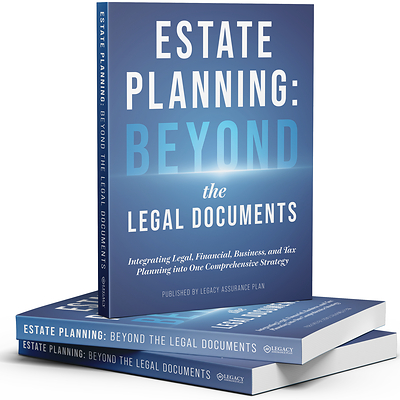
That's the premise behind Estate Planning: Beyond the Legal Documents — Integrating Legal, Financial, Business and Tax Planning into One Comprehensive Strategy, a new 454-page guide from Legacy Assurance Plan, a membership-based estate planning organization serving families across 25 states throughout the Midwest and South, now available in paperback and Kindle editions on Amazon.
Consider a parent who adds an adult child to a joint bank account, simply as a convenience, a way to help pay bills or handle things if she's ever hospitalized. Her will, drafted years earlier, divides everything evenly among her three children. But a jointly titled account passes automatically and entirely to the surviving co-owner the moment she dies, regardless of what the will says, inadvertently disinheriting her other two children from an inheritance she'd always intended them to receive. The account was never part of the estate to begin with — the will was never wrong; there was simply nothing left for it to divide.
"Most estate plans don't fail on paper. They fail in execution," said David M. McInerney, J.D., LL.M., co-author and chief legal officer of Legacy Assurance Plan, who has practiced estate planning law for more than 30 years. "A beautifully drafted trust can't accomplish its purpose if the assets never make it into the trust, and no estate planning document can override an account or beneficiary designation that sends an asset somewhere the client never intended."
Why well-drafted documents aren't enough
The book's central idea is straightforward: Estate planning works best as a coordinated, ongoing process, not a collection of documents signed once and filed away. Problems tend to surface when trusts go unfunded, when account ownership drifts out of sync with the plan, when a business succession arrangement is never connected to the estate plan or when retirement and tax strategies are built separately from the legal one. These gaps are often invisible for years and typically surface only after death or incapacity, when there's no longer a chance to fix them.
A financial and tax landscape worth a second look
Recent legal changes give families a genuine reason to revisit plans that may have been "finished" for years:
- Inherited retirement accounts are now subject to accelerated distribution timelines that catch many beneficiaries off guard.
- Required minimum distribution rules under SECURE 2.0 continue to evolve, changing how and when inherited accounts must be drawn down.
- The federal estate tax exemption, now set at $15 million per individual under recent legislation, has removed federal estate tax exposure for most families. That, paradoxically, leads many to assume coordination no longer matters. It still does: state-level estate and inheritance taxes remain in effect in a number of states, and beneficiary designations and account titling issues have nothing to do with the federal exemption at all.
"A will or trust is essential, but signing the documents should not be viewed as the finish line," McInerney said. "The real objective is making sure the legal, financial, tax and personal pieces are coordinated so the plan works in practice, not just on paper."
Beyond wills and trusts
The book goes past the core documents to address retirement accounts, beneficiary designations, trust funding, tax strategy, business succession, special needs planning, long-term care considerations, digital assets and end-of-life decisions. Its aim is to move families past a simpler question — "Do I have an estate plan?" — toward the one that actually matters:
"Will all the pieces of my estate plan actually work together when my family needs them?"
Estate Planning: Beyond the Legal Documents is available now on Amazon in paperback and Kindle editions. Review copies, author interviews and consultations are available upon request.
About the Authors
David M. McInerney, J.D., LL.M., is chief legal officer of Legacy Assurance Plan and an estate planning attorney with more than 30 years of experience.
Kelly Gicale, J.D., CFRE, is a Tampa-based attorney and Certified Fund Raising Executive focused on legal planning and philanthropic strategy.
About Legacy Assurance Plan
Legacy Assurance Plan is a membership-based estate planning organization headquartered in University Park, Florida, serving families across 25 states throughout the Midwest and South, with continued expansion underway. The organization helps families coordinate attorneys, legal documents, beneficiary designations and financial accounts into a single, actively maintained estate plan, with services including trust funding assistance, ongoing plan reviews and estate settlement support. Learn more at legacyassuranceplan.com.
Media Contact
Thomas Alberts
Staff Journalist, Legacy Assurance Plan
844-306-5272
Info@legacyassuranceplan.com

 View original content to download multimedia:https://www.prnewswire.com/news-releases/new-book-reveals-why-even-well-drafted-estate-plans-fail-302867727.html
SOURCE Legacy Assurance Plan